Masonry Pompano Beach

Brick Masonry in Pompano Beach, FL

Brick Masonry Contractor in Pompano Beach, FL

Whether you are planning new brickwork or a section of brick has started to crumble, you want it to look right and still be standing years from now. Brick is unforgiving: mortar that does not match, uneven courses or the wrong brick show up immediately.

Tell us what you have and what you want, and we will review it and come back with a written estimate for the brickwork.

  • Residential and commercial masonry
  • Serving Pompano Beach and nearby Broward County
  • Free project estimates

Get Your Free Estimate

Takes about 30 seconds.

By submitting you agree to be contacted about your project.

Brick that looks tired, or a project that has to look right the first time

Most people land on a page like this for one of two reasons. Either something they already own is deteriorating, or they are planning something new and are not sure how it should be done.

In South Florida, brick lives with sun, heavy rain and salty, humid air. Mortar joints soften, faces flake and water finds its way into places it should not. A small problem on the surface can be a bigger one underneath, which is why it is worth having someone look at it properly rather than guessing from the driveway.

For new work the worry is different: will it match the house, will the lines be straight, and will it last? Those are all questions of planning and workmanship, and they are easier to settle before the first brick goes down.

Signs your brickwork needs attention

  • Mortar joints that are crumbling, sandy or recessed
  • Bricks with flaking or peeling faces
  • White powdery staining (efflorescence), which points to moisture moving through the wall
  • Stair-step cracks following the mortar joints
  • Sections that are loose, leaning or bulging
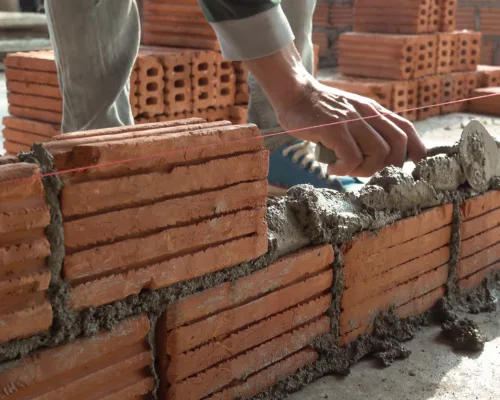
Mason laying clay brick with mortar

What brick masonry involves

Brick masonry is the craft of bricklaying: laying brick in mortar to build walls, columns, steps, borders and decorative features, and of repairing brickwork that has been damaged. It is used on homes, garden and entry features, commercial frontages and outdoor living areas.

The finished result depends on decisions made before laying starts: the type of brick, the bond pattern, the mortar colour and mix, the base it sits on and how water will be kept out of the wall. We explain those choices in plain language so you are not signing off on things you do not understand.

This is part of our masonry services in Pompano Beach. If you are comparing options, you may also want to read about brick walls, masonry repair and stone masonry.

Brickwork we can help with

Brick jobs fall into a few common groups. Here is how each one usually works and what is worth thinking about.

New brick walls, columns and steps

You want a feature that looks established from day one: an entry column, a set of steps, a low boundary wall. The work starts with the base, because brick is heavy and needs solid support, then moves to layout so the courses finish cleanly at corners and openings.

The benefit of having it done properly is a result that stays straight and tight instead of drifting or cracking at the joints.

Worth considering: Decide early on the brick, bond pattern and mortar colour. Seeing a sample against your house is worth the effort.
Brick veneer

Veneer gives a brick look to a wall that is built from another material. It is a good option when you want the appearance without a full structural brick wall.

The detail that matters most is moisture: veneer needs to be tied back properly and allowed to shed water, otherwise problems show up behind it.

Worth considering: Ask how the veneer will be attached and how water that gets behind it will drain out.

Matching brick for repairs

When only part of a wall is damaged, the goal is a repair you cannot easily spot. That means cutting out the failed brick and mortar and rebuilding with brick and mortar that blend with the original.

Perfect matches are not always possible with older brick, so we are upfront about what is achievable before work begins.

Worth considering: Find out whether the cause of the damage, often water, is fixed too. Replacing brick without that can mean doing the job twice.

Repointing (tuckpointing) worn mortar joints

Mortar is the part of a brick wall that wears out first. Repointing, often called tuckpointing, removes the deteriorated mortar to a sound depth and refills the joints so the wall sheds water again.

Done well, it extends the life of the wall and tidies its appearance. Done badly, with the wrong mortar or too shallow, it fails quickly.

Worth considering: The new mortar should not be harder than the brick around it. This is a question to ask any contractor.

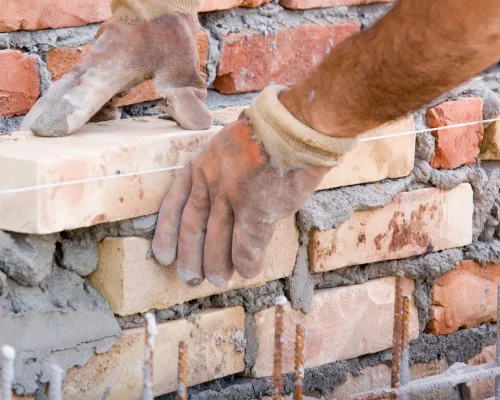
Bricklayer setting a brick in fresh mortar

Why careful workmanship matters in brick

Brick shows its mistakes. Uneven joints, courses that wander and mismatched mortar are visible from the street. The less obvious errors are the ones that cost money later: poor bedding, joints left open, no thought for where water goes.

Taking shortcuts rarely saves much. Cheap, rushed brickwork tends to need repairs sooner, and repairs on top of poor work cost more than doing it properly first. A good contractor will explain what they are doing and why, rather than only quoting a number.

What happens after you send your details

  1. Enquiry received

    You send your project details through the estimate form at the top of this page.

  2. Project review

    We read your description and look at your photos to understand what you need.

  3. Assessment

    We work out what is likely to be involved, and may ask follow-up questions or arrange to see the property.

  4. Estimate

    We explain the proposed work and give you the price in a written estimate.

  5. Project completion

    Once you are happy to go ahead, the agreed work is carried out.

Choosing materials and options for your brickwork

A few decisions shape how your brickwork looks, performs and ages.

Clay brick versus other masonry

Clay brick has a classic look and good durability. Concrete block with a brick or stucco finish can be more economical for large walls. The right answer depends on the structure and the look you want.

Brick colour and texture

Brick varies by batch, so colour is judged from a sample, not a catalogue photo. Smooth, textured and tumbled faces all age differently.

Bond pattern

The pattern of the courses changes the character of a wall as much as the brick itself. Running bond is the common default, but other patterns suit certain features.

Mortar colour and mix

Mortar makes up a large part of the visible surface. Colour and joint profile affect both the look and how well water sheds off the wall.

Sealing and upkeep

Some brick benefits from sealing, some does not. Coastal conditions make it worth asking about maintenance for your particular brick.

Why property owners in Pompano Beach consider us

Plain explanations

We explain what the work involves and why, so you can make decisions without needing to be an expert.

Written estimates

The scope and the price are put on paper, so you can compare them with other quotes.

Residential and commercial

We take on homeowner projects as well as commercial work.

Local to Pompano Beach

We work in Pompano Beach and nearby Broward County, so local conditions are familiar.

Attention to what you cannot see

Footings, reinforcement, moisture protection and drainage get as much attention as the finished surface.

Where we do brick masonry

We are based in Pompano Beach and take projects in the cities within roughly a 30-minute drive, across Broward County and into southern Palm Beach County.

Questions about brick masonry

How much does brick masonry cost?

It depends on the size of the job, the brick you choose, how much detail is involved and how easy the site is to work on. We price each project in writing after reviewing the details, rather than quoting from a distance.

Can damaged brick be repaired instead of replaced?

Often, yes. Localised damage such as worn mortar or a few failed bricks can usually be repaired. Widespread damage, bulging or movement may point to a bigger problem that needs a closer look.

What is the difference between repointing and tuckpointing?

The terms are often used interchangeably. Both mean removing worn mortar from the joints and refilling them so the wall sheds water. Tuckpointing can also describe a finer finishing technique, so ask what a contractor means when they quote it.

Will new brick match my existing brick?

We aim for the closest match possible. With older brick an exact match is not always available, and we will tell you what to expect before starting.

How long does a brick project take?

It varies with size, weather and any permits needed. We will discuss the schedule when we review your project.

Do I need a permit for brickwork?

Decorative and minor repair work is often different from structural work. Whether a permit applies depends on what is being built and where, and we can confirm for your project.

Do you work on homes and commercial buildings?

Yes, we take residential and commercial projects.

How do I get an estimate?

Use the form at the top of this page. Tell us what you need, describe the job and, if you can, attach a photo.

Getting the brickwork you actually want

Good brickwork starts with understanding what is wrong or what you want, picking suitable materials and giving the job the preparation it deserves. If you are not sure which of those applies to you, describe the situation in the form above and add a photo if you can.

Related services